Mt Lebanon vs Upper St Clair: Find Your Best Fit
May 28, 2026
May 28, 2026
Trying to choose between Mt. Lebanon and Upper St. Clair? You are not alone. Many buyers moving within the South Hills or relocating to the Pittsburgh area narrow their search to these two well-known communities, then realize the better choice often comes down to how you want to live day to day. This guide breaks down the differences in layout, housing, parks, commuting, and overall feel so you can decide which suburb fits your lifestyle best. Let’s dive in.
Both communities offer established residential neighborhoods, convenient access to the South Hills, and a strong reputation within the Greater Pittsburgh market. Still, they feel meaningfully different once you look at how they are built and how people move through them.
Mt. Lebanon is more compact and more densely settled. According to 2024 Census QuickFacts, it has 32,917 residents across 6.08 square miles, with a population density of 5,606.3 people per square mile. Upper St. Clair is larger in land area at 9.82 square miles, but smaller in population at 20,466, with a lower population density of 2,155.7 people per square mile.
That difference shapes the everyday experience. If you want a more connected street grid and a closer-together neighborhood feel, Mt. Lebanon may stand out. If you prefer more space between homes and a more spread-out suburban setting, Upper St. Clair may feel like a better match.
For many buyers, budget and property style are the first filters. The two communities are both established suburban markets, but the price points and lot expectations are not exactly the same.
According to 2024 Census QuickFacts, the median value of owner-occupied homes in Mt. Lebanon is $378,300. In Upper St. Clair, the 2024 Census QuickFacts figure is $431,800. That puts Upper St. Clair about $53,500 higher by this measure.
Lot standards also help explain the difference in feel. Mt. Lebanon’s R-1 zoning requires a minimum lot area of 8,000 square feet and a minimum lot width of 60 feet. Upper St. Clair’s R-1 zoning requires a larger minimum lot area of 13,000 square feet and a minimum lot width of 90 feet.
In practical terms, Mt. Lebanon often appeals to buyers who are comfortable with smaller lots and a more compact neighborhood pattern. Upper St. Clair may appeal more if you want a larger lot footprint and a more spacious suburban layout.
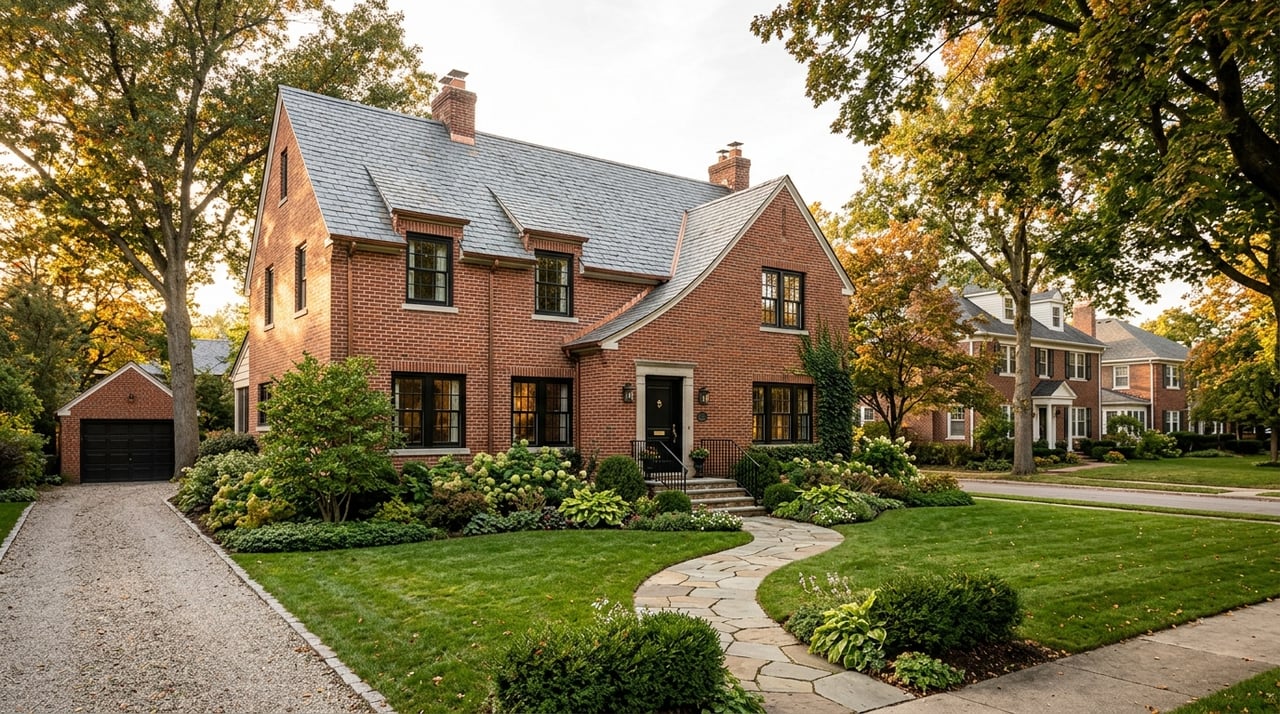
If architecture matters to you, Mt. Lebanon offers a broader mix of older and newer housing. The municipality’s design guide identifies Foursquare, Colonial Revival, Tudor, French Eclectic, Cotswold, and Arts & Crafts homes in the historic district. It also notes nearby neighborhoods with Post-War Minimal, Ranch, Split-Level, Modern, and Postmodern homes.
That variety gives Mt. Lebanon a layered look. You may find blocks with older architectural detail, then nearby areas with more mid-century and later housing types.
Upper St. Clair’s official materials do not provide a formal architectural style list, but the township’s trends report says most of the housing stock was built between 1950 and 1989. That points to a more postwar suburban housing base overall.
If you are drawn to older architecture and a wider range of home styles, Mt. Lebanon may offer more of what you are looking for. If you prefer neighborhoods shaped more by postwar suburban development, Upper St. Clair may feel more consistent from one area to the next.
Your daily routine can quickly shape how happy you are with where you live. This is one of the clearest differences between Mt. Lebanon and Upper St. Clair.
Mt. Lebanon is the more transit-embedded option. The municipality says Pittsburgh Regional Transit serves the community with access to other South Hills communities, Station Square, Downtown Pittsburgh, and the North Shore. Mt. Lebanon Station sits on the Red Line, and bus routes 36 Banksville, 38 Green Tree, and 41 Bower Hill also serve the area.
Mt. Lebanon also describes itself as a regionally renowned walking community, and its Complete Streets policy supports that more walkable identity. Census QuickFacts show a mean commute time of 25.6 minutes.
Upper St. Clair also has rail access through the South Hills Rail Center and some bus access, but the township’s 2024 trends report shows a more car-oriented pattern. In 2022, 69.8% of workers commuted by car, 4.3% used public transportation, and 24.4% worked from home. The average commute time reported there was 29.2 minutes.
If transit access and walkability are priorities, Mt. Lebanon is likely the stronger fit. If you are comfortable with a more car-centered lifestyle, Upper St. Clair may align better with how you already live.
Both communities offer strong recreation options, but they do so in different ways. The question is less about whether there are parks and more about what kind of park system you want around you.
Mt. Lebanon says it has 16 parks, with Mt. Lebanon Park as the flagship. Its park system includes a swim center, ice center, racket center, golf course, pavilions, playgrounds, courts, and other recreation facilities.
That setup gives Mt. Lebanon a compact, amenity-rich feel. Many recreational features are woven into the community in a way that supports active day-to-day use.
Upper St. Clair owns and manages more than 700 acres of parkland across 14 parks. The township identifies Boyce Mayview Park at about 481 acres, Gilfillan Park at 59 acres with a 1.25-mile nature trail, Municipal Park at 29 acres, plus 11 additional neighborhood parks.
If you want more total park acreage and larger open spaces, Upper St. Clair stands out. If you like a tighter neighborhood park network with a broad mix of recreation facilities close at hand, Mt. Lebanon may be more appealing.
For buyers comparing school districts, the most useful distinction in this research is scale. Both districts serve substantial student populations, but their size and structure differ.
Mt. Lebanon School District reports 5,426 students as of January 2026 across 7 elementary schools, 2 middle schools, and 1 high school. Upper St. Clair School District says it serves more than 4,000 students across 6 public schools.
Upper St. Clair’s district also notes that 92% of graduates pursue further education, and the district homepage says Upper St. Clair High School earned Gold distinction on the 2025 AP Honor Roll. Mt. Lebanon’s district is larger overall and includes more neighborhood elementary schools.
For your home search, that may translate into different preferences around school scale and community layout. Some buyers prefer a larger district footprint with more neighborhood-based elementary options, while others prefer a somewhat smaller and more centralized system.
The better choice depends on what matters most in your daily life. There is no one-size-fits-all answer, but the data does point to some clear patterns.
Online research can narrow your list, but it usually cannot make the final decision for you. The real test is how each community feels when you spend time there.
A smart comparison often includes:
When you do that, the tradeoffs become easier to see. One community may simply feel more natural for your routine, budget, and long-term goals.
If you are weighing Mt. Lebanon against Upper St. Clair, the right guidance can help you move from general impressions to a confident decision. The Darla Kay Jobkar Real Estate Team can help you compare neighborhoods, evaluate home values, and build a smart search strategy across the South Hills.
We are dedicated to helping you find your dream home and assisting with any selling needs you may have. Contact us today to start your home searching journey!